Key takeaways
- Keep pH between 7.4 and 7.6 and alkalinity between 80 and 120 ppm.
- Stabilizer above 50 ppm silently weakens chlorine; test it regularly.
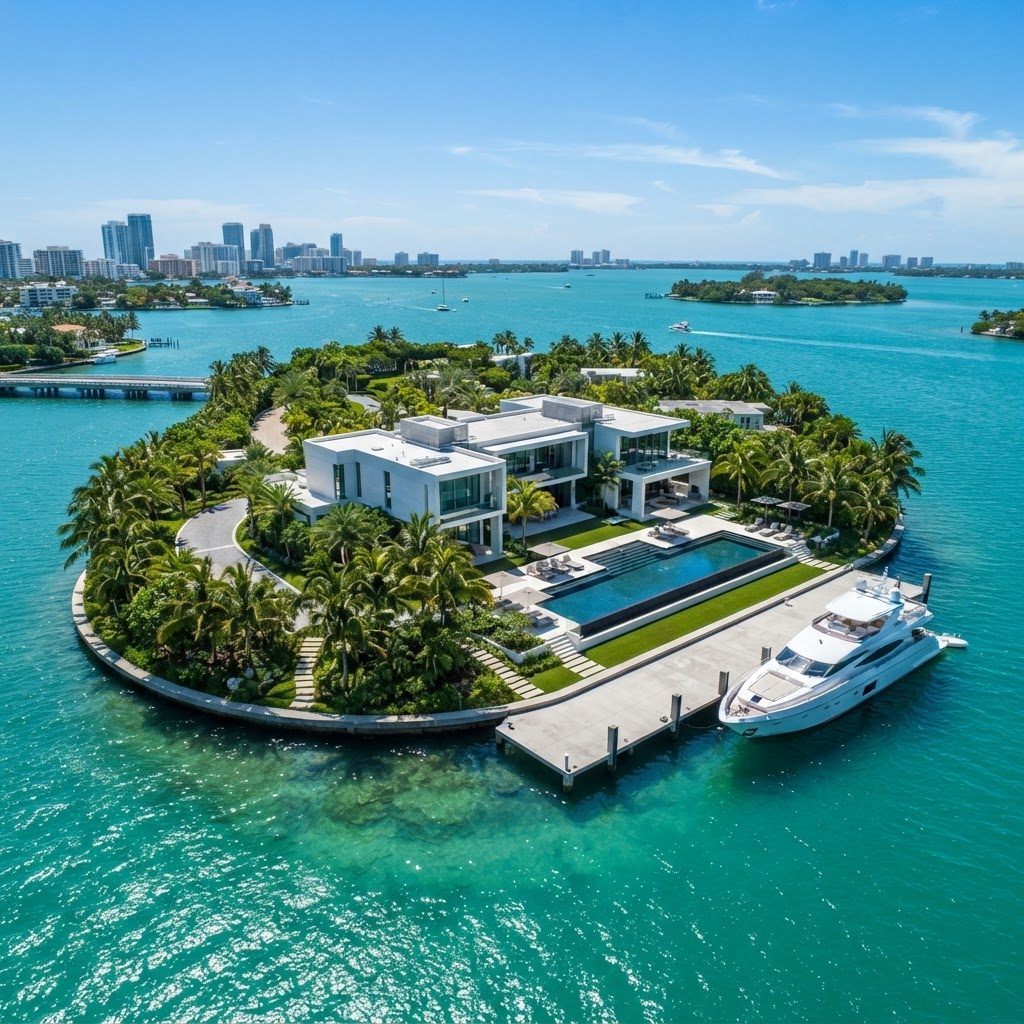
- Coastal Miami pools need calcium and corrosion management from the first fill.
- Weekly professional testing prevents costly damage to luxury finishes.
Why chemistry matters more in Miami
Pool water in South Florida is under constant pressure. Intense ultraviolet exposure destroys free chlorine within hours, afternoon storms dilute stabilizer and alter pH, and salt-laden coastal air accelerates corrosion on ladders, heaters and stone coping. A luxury pool that looks effortless is, in reality, the product of disciplined weekly testing and small, precise adjustments.
Balanced water protects three things at once: the health of swimmers, the longevity of expensive finishes like pebble, glass tile and marble, and the mechanical life of pumps, heaters and salt cells.
The five numbers every pool owner should know
pH measures how acidic or basic the water is. The ideal range is 7.4 to 7.6. Low pH etches plaster and corrodes metal; high pH clouds water, scales tile and cripples chlorine effectiveness.
Total alkalinity is pH’s shock absorber. Keep it between 80 and 120 parts per million so pH does not swing after rain or heavy swimming.
Calcium hardness protects plaster and pebble finishes from leaching. Aim for 200 to 400 ppm; Miami’s municipal water often arrives low, so new fills frequently need calcium added.
Cyanuric acid, the stabilizer, shields chlorine from sunlight. Between 30 and 50 ppm is ideal. Over-stabilized water, common in pools that rely on tablet chlorine, makes sanitizer sluggish and is a leading cause of persistent algae in South Florida.
Free chlorine between 2 and 4 ppm, adjusted upward for high stabilizer, keeps water sanitized. Salt water pools generate chlorine on site but are governed by the same rules.
The role of a professional service
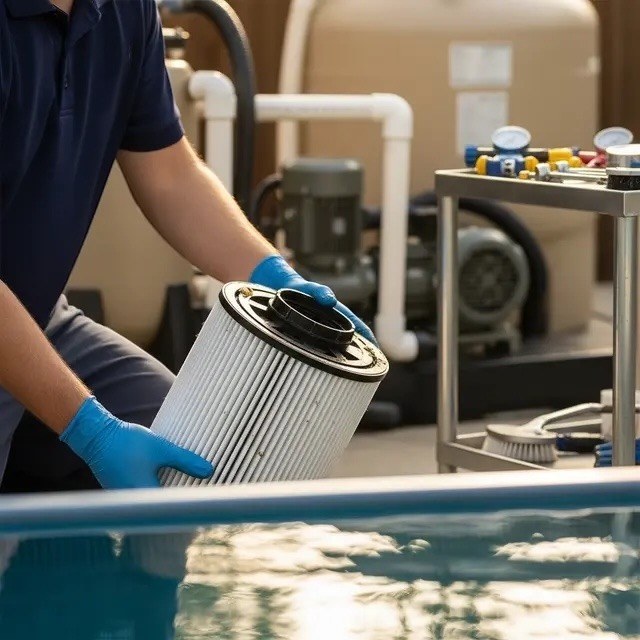
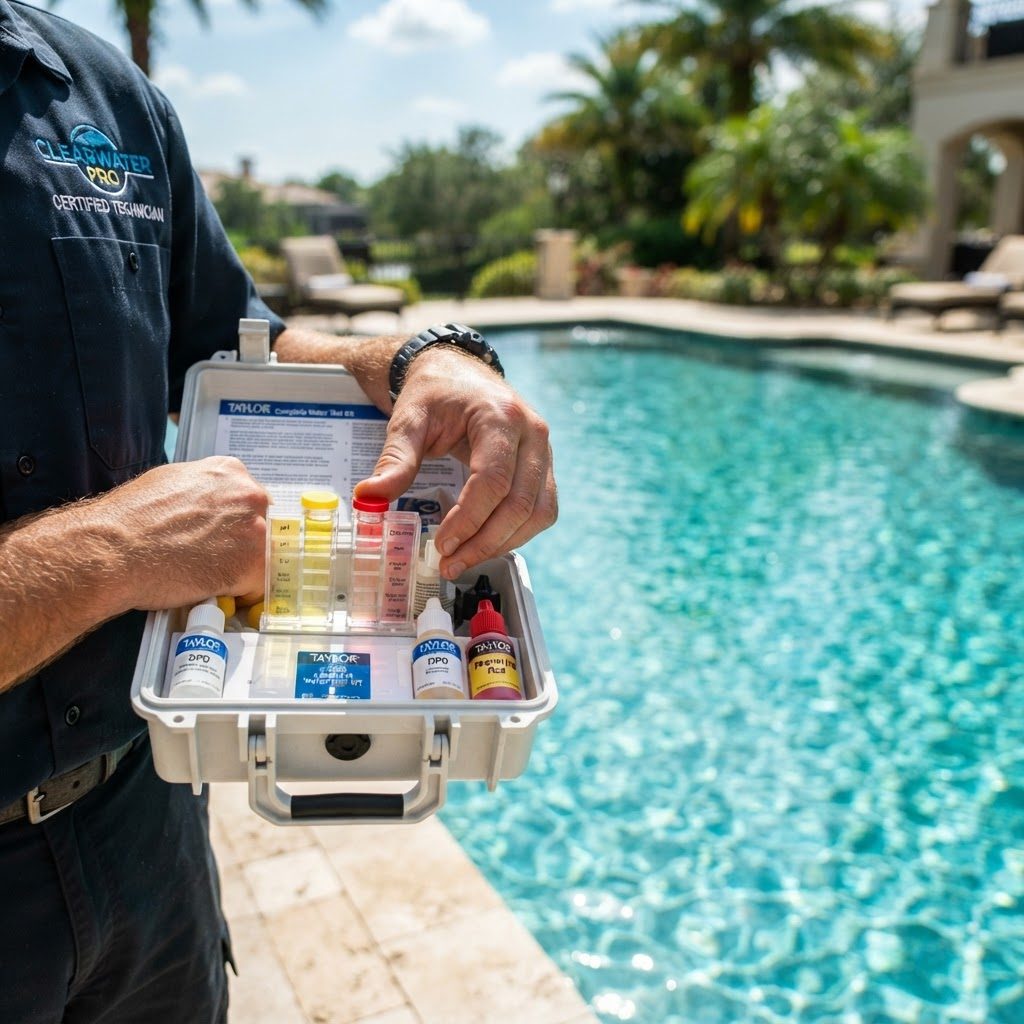
Consumer test strips are a starting point, but professional technicians use calibrated photometers or reagent kits, track trends week over week and understand how one parameter influences another through the Langelier Saturation Index. Oceanus Pool Cleaning tests and documents every parameter on every visit so estate managers have a clear record of water quality.