Key takeaways
- Brush the pool weekly, even when it looks clean.
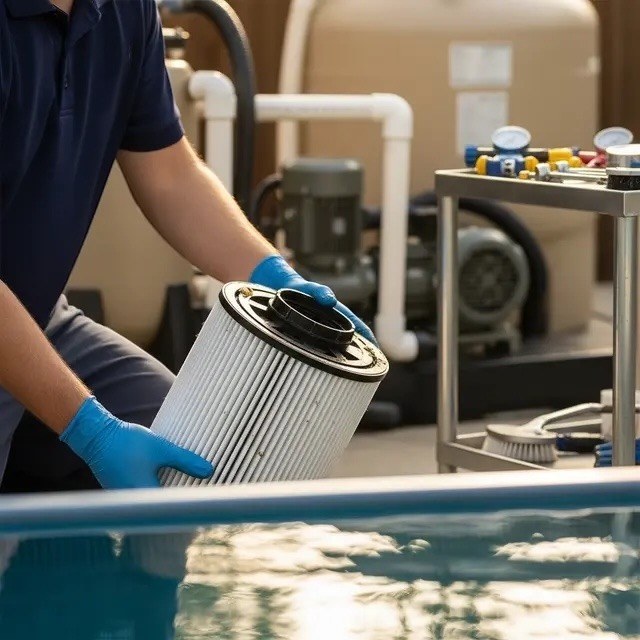
- Watch filter pressure; a 10 psi rise means it is time to clean.
- Never drain before a hurricane. Super-chlorinate and secure equipment instead.
- Test for phosphates in heavily landscaped properties.
Weekly essentials
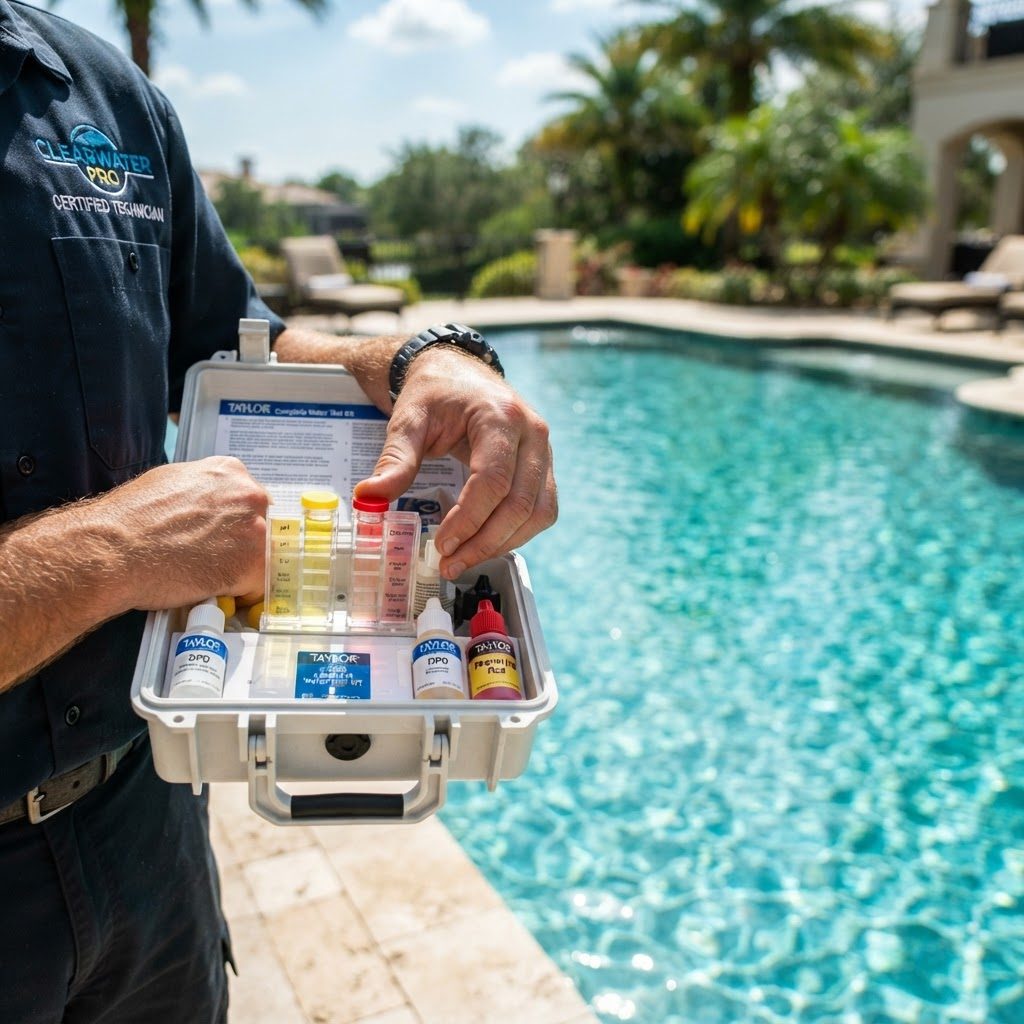
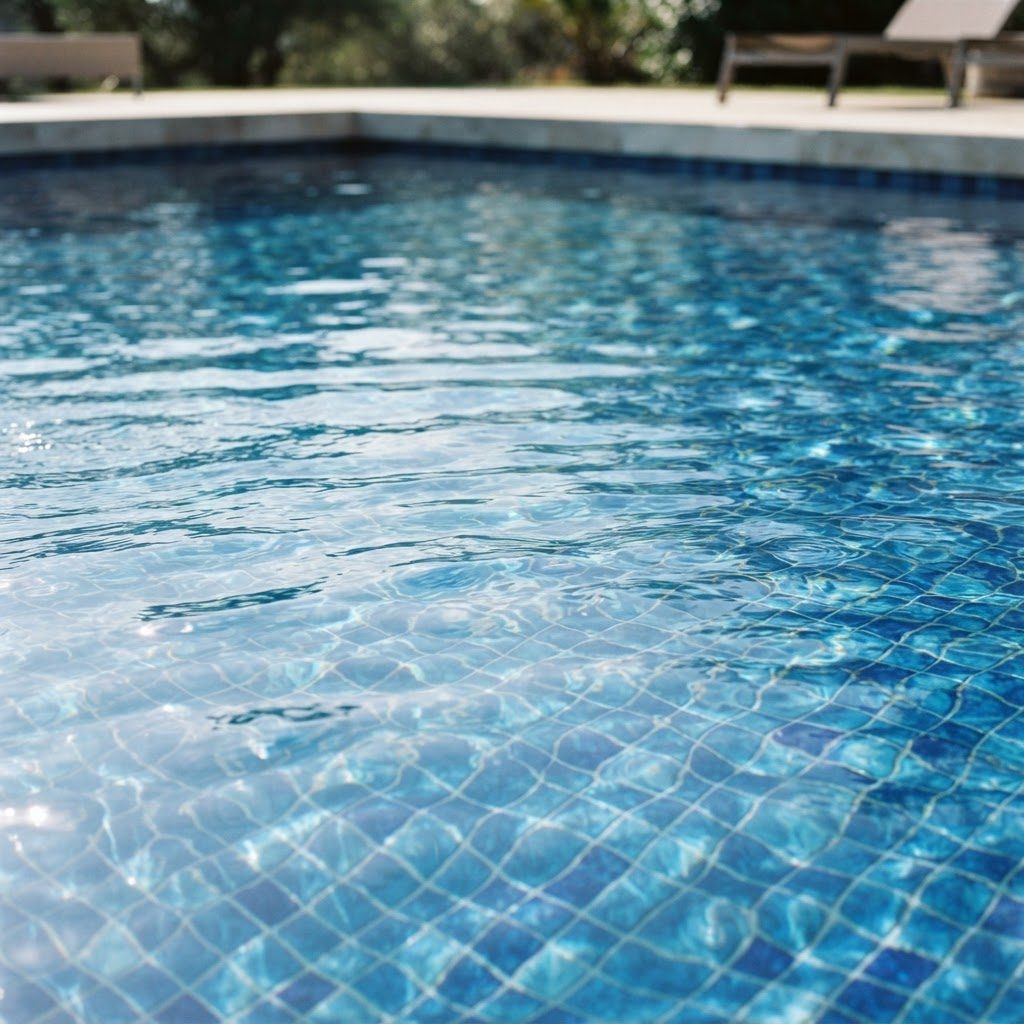
Skim the surface, brush walls and the tile line, vacuum the floor, empty skimmer and pump baskets and test water chemistry. Brushing is the most neglected task and the most important: it disrupts algae before it can establish and keeps calcium from bonding to tile.
Check filter pressure against its clean baseline. A rise of 8 to 10 psi means the filter needs backwashing or cartridge cleaning. Ignoring pressure starves the pump and reduces circulation, the root cause of most cloudy water.
Monthly and quarterly
Inspect the salt cell for scale and clean with a mild acid solution if needed. Lubricate o-rings on pump lids and filter tanks. Test for phosphates, a nutrient source for algae that arrives with landscaping runoff and heavy debris in Coconut Grove and Pinecrest.
Quarterly, inspect heater exchangers for corrosion, verify automation schedules and confirm variable-speed pump programs still match seasonal demand. Longer run times are required in summer to turn the water over completely.
Rainy season and hurricane preparation
From June through November, expect dilution and debris. Do not drain the pool before a storm; a full pool protects the shell. Instead, super-chlorinate, remove loose deck items, turn off power at the breaker and secure equipment. After the storm, remove debris promptly, rebalance chemistry and run the filter continuously until clear.