Key takeaways
- Expect to manage rising pH with regular acid dosing.
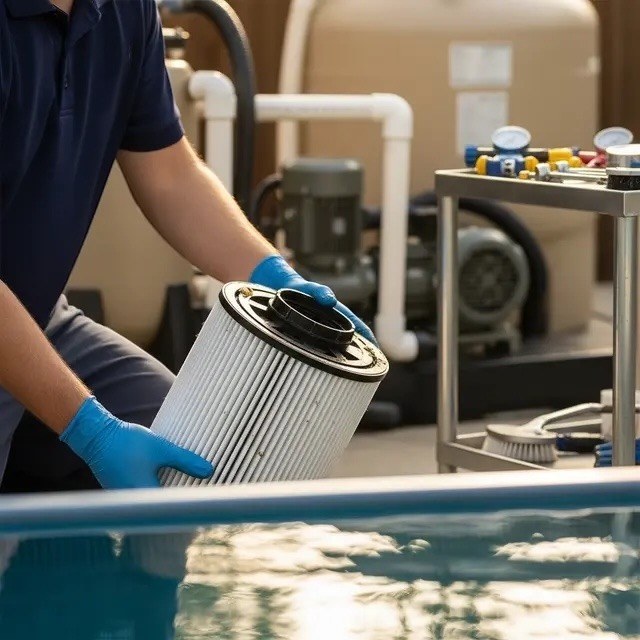
- Inspect and clean the salt cell every 60 to 90 days.
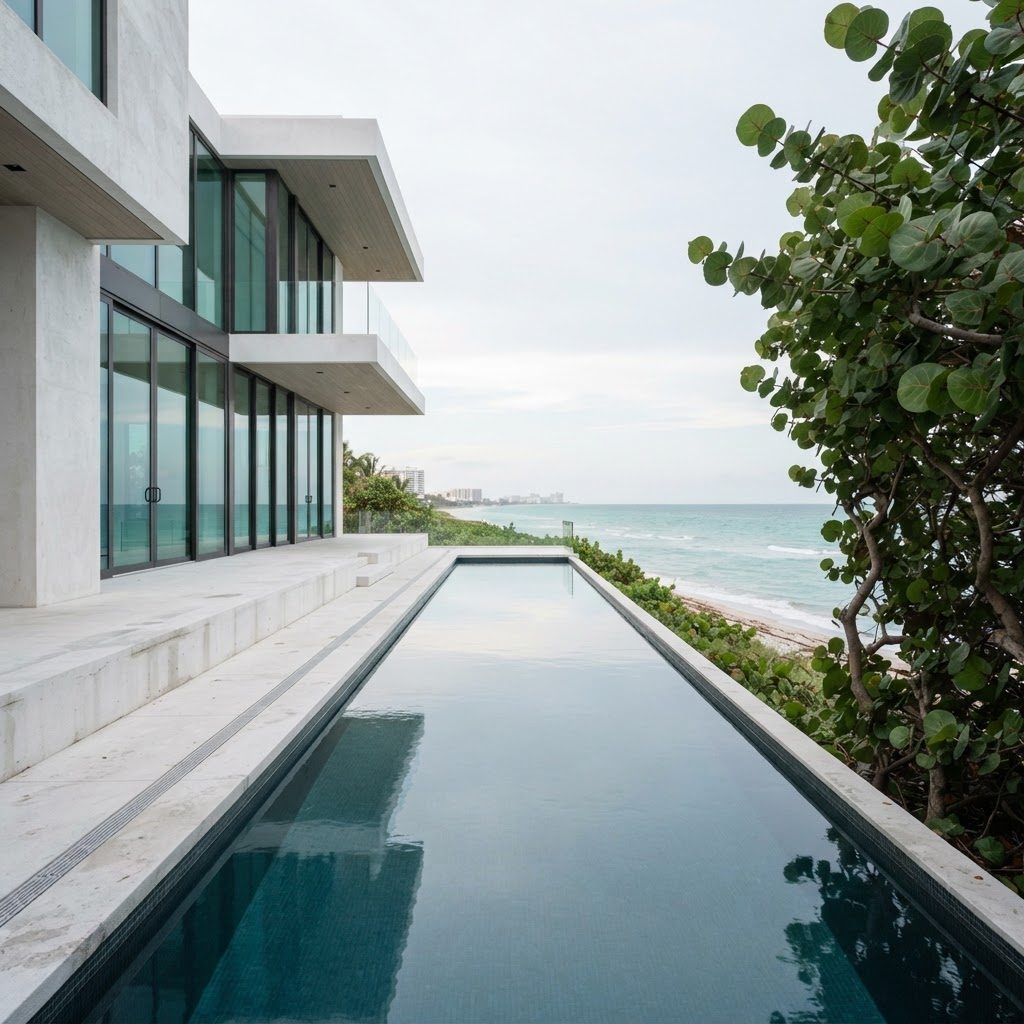
- Seal natural stone coping and specify corrosion-resistant equipment.
- Match pump run time to summer chlorine demand.
How a salt system works
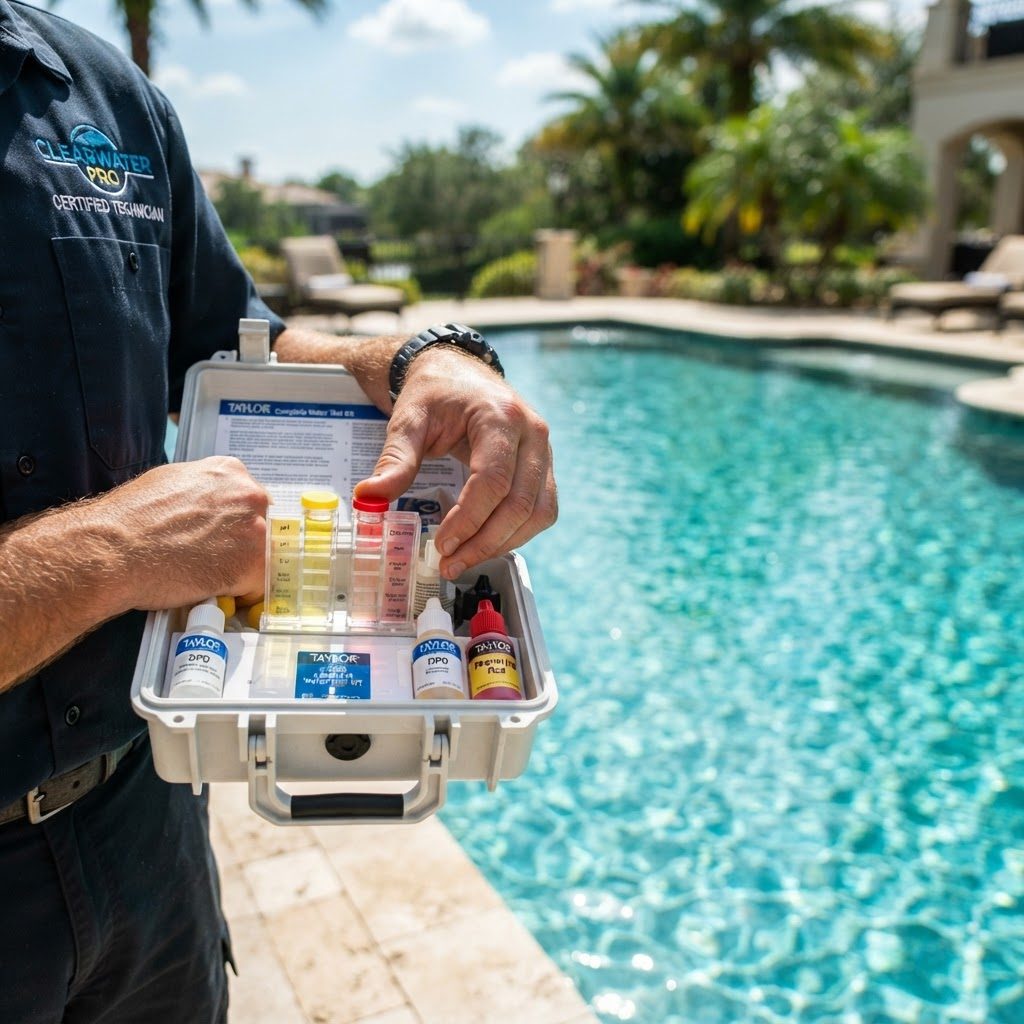
A salt chlorine generator passes mildly salted water, typically 2,700 to 3,400 ppm, through an electrolytic cell that converts chloride into chlorine gas which dissolves instantly into the water. The result is a steady, gentle sanitizer supply without storing liquid or tablet chlorine.
What changes in a coastal environment
Salt systems drive pH upward, so acid additions are routine. Calcium scale forms on the cell plates faster in Miami’s warm, hard water, requiring inspection every 60 to 90 days. Salt also accelerates corrosion of unsealed natural stone, stainless fixtures and some heater exchangers; choosing cupro-nickel or titanium components pays off.
Because salt cells only produce chlorine while the pump runs, variable-speed pump schedules must be tuned so output matches summer demand. Under-production is the most common cause of algae in salt pools.